Showing posts with label Reviews. Show all posts

Friday, April 22, 2022

Does Anyone Else Remember The Story Keepers?


The Story Keepers is a children’s cartoon produced by Zondervan and Focus on the Family that ran from 1995-1997. I have vivid childhood memories of watching this show Friday mornings. It follows the adventures of Christians in first century Rome as they dodge the authorities to share the gospel.

I was surprised to learn that there were only thirteen episodes. For whatever reason, when I was a kid, I thought there were so many episodes I would never see every single one.  Although it is shorter than I remembered it was by no means incomplete. These thirteen episodes tell a complete story and end on a four-part Easter special. 

The animation for the present of 64AD is more goofy and fun, but the animation changes to different more elegant and artistic styles when it is focusing on a gospel story being told. For example the parable of the good samaritan is very angular and has dark earthy tones while the story of the calming of the sea is more fluid and uses blue and cool tones. 
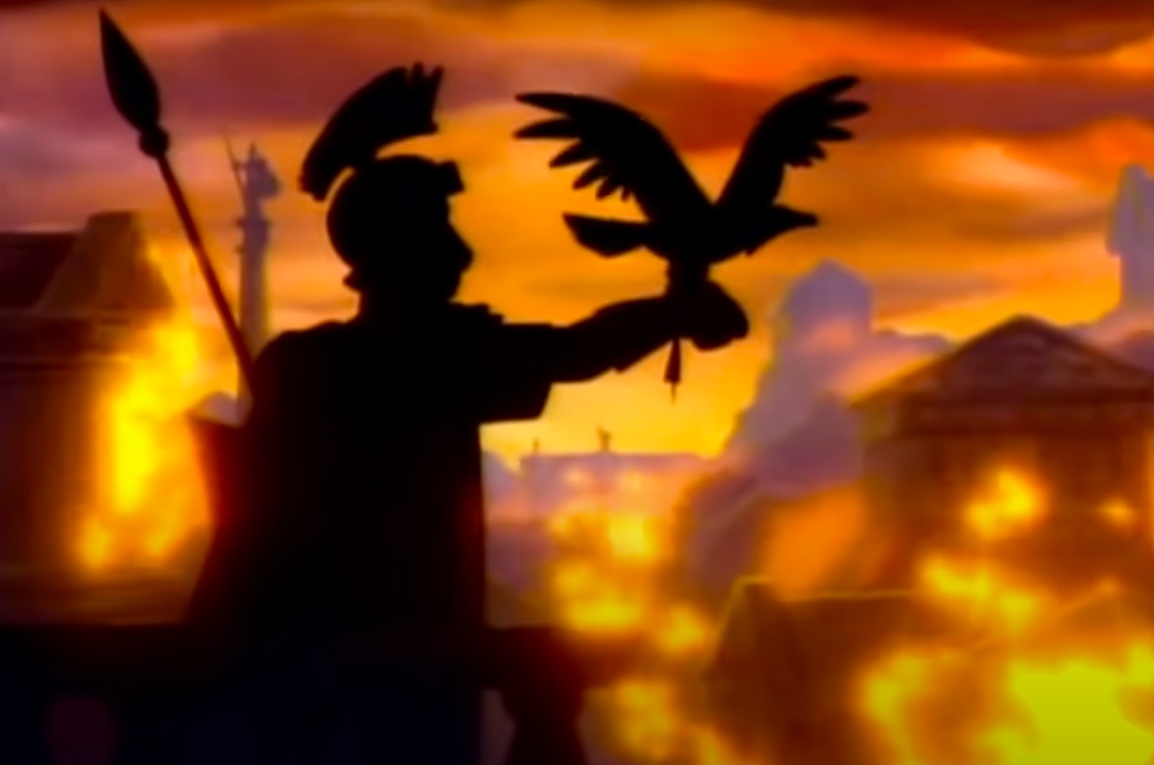
Rome 64 AD

The first handful of episodes are more goofy and campy than the later ones. The animation also increased in quality the longer the show went on.  I think it took them a little bit to find their style, but even then I enjoyed the earlier episodes despite how absurd (or maybe because) they were.

The characters don’t fall into the boxes and tropes that I usually see in Christian fiction. Ben the Baker, our protagonist, and his wife are fostering several children whose parents have gone missing during the great fire of Rome. These children have a differing range of optimism and they aren’t always happy and hopeful that they will see their parents again. Some like Marcus, the youngest, are absolutely confident that their parents are out there waiting for them, while others like his older brother, Justin, are not. 

The Christians are not portrayed as being perfect and happy all the time, they disagree with one another,  they make mistakes because they are prideful and refuse to listen, sometimes with huge consequences.  Also, they struggle to be completely true to their faith. In the first episode, Tacticus, a sympathetic guard, advises Zak, one of Ben’s foster-children awaiting execution, to just proclaim Nero as a god because he has seen many Christians do so and their lives were spared.

Words cannot describe how much I despised this man. 

Not all non-Christians are super villains. The only two completely unsympathetic pagan characters are the major villains Nihilus (yes there was a villain named Nihilus this show is not very subtle in that regard) and Nero.

However, they are evil because the latter is a narcissist with a god-complex and the former is an unscrupulous follower of said narcissist. Although I hated Nero and Nihlus, it’s in the best way possible; they are entertaining and take over every scene they are in. Did mention? Nero is played by Tim Curry.

My favorite character is Tacticus who *spoilers* eventually converts to Christianity. However, he does not hear one gospel story and immediately asks to be baptized. He starts as an honorable man before he converts, and it takes the course of the series for him to believe in Jesus. I appreciate this more as an adult than I did as a child because in real life, most people who change their beliefs take time, and are not bad people before and after they make this change.

All episodes can be watched for free on YouTube here. If you have kids, I especially recommend you show it to them. The Story Keepers is up there with VeggieTales as one of the best Christian children’s shows ever produced


Friday, March 18, 2022

Deadly Flowers: A Book Review


         Deadly Flowers is a middle-grade novel that follows Kata, a stellar student at ninja academy for girls. Kata has the honor of being assigned her first solo mission, an assassination. However, upon realizing that her target is a little boy, Kata has second thoughts about her mission and has to make a difficult choice.   I have very mixed feelings about this book, but I still prefer to start with what I liked first.

         The author certainly did her research when writing about the ninja. As a self-identified ninja enthusiast, I enjoyed it. I feel she could have gone a little further with the factual information about the ninja and the like, but I do know that the average reader may not appreciate this the same way I would and it’s a story not an encyclopedia.

         The beginning set at school and were my favorite parts. I liked how the girls, who are mostly orphans, looked out for each other in their own ways and the nicknames they gave to their instructors behind their backs. It all made the school feel more like a real place.

What didn’t work for me:

           Kata’s arrogance blew my mind. She’s a fifteen-year-old ninja who has been training her entire life. I think she should be allowed to have some confidence, but to a point. She constantly thinks about how she is so much better than her two companions, and mentions how it has been years since she has been punished at school for failing even the most difficult of an exercise because she is just that amazing. Speaking of her two companions, Kata has a strong disdain towards Saiko. Kata reminds the reader of this dislike every other page. In my opinion, I see it as believable that someone like Kata may not click with someone like Saiko immediately. However, we do not need the narrator to more or less say “I don’t like this person” nearly every time the character breathes. (That might be a bit of an exaggeration, but it did happen enough to grow tiresome).

Towards the end of the book, the characters seem to only take action because the plot needs to keep moving so people need to do things. I don’t want to spoil anything so I will leave it at that.

         My final gripe is the way the book handles foreshadowing. During the story, things happen that may make a critical reader raise an eyebrow. That is okay. What is not okay to me is that when this comes to fruition, the narration reminds us of every single moment that led up to this. Stuff the reader is already aware of. This bothered me because it came across more like the writing saying, “You are too simple to remember what happened so I am going to remind you.”

         Deadly Flowers is okay. I feel it actually could have used more information on the Ninja, but I know I am just an enthusiast so this might not be the opinion of the average reader. The action scenes (mostly blow-by-blow descriptions) could also use some work, but it is not the main focus of the book.

I will admit that a lot of my issues with this book are personal pet peeves of mine, foreshadowing, the main character’s personality, etc so I would say if you read this and think what bothered me would probably bother you as well, then this book might not be for you. However, if my concerns don’t seem like that big of a deal then I think it would not hurt at all to give it a try.

Friday, March 4, 2022

Just Ella Sacrifices Magic and Wonder for "Empowerment"


    Just Ella is a retelling/sequel to the Cinderella fairytale. It follows our heroine Ella after the ball when she is getting ready to marry her prince, and her happily ever after is right on schedule. However, she quickly realizes that life at court as a future princess may not be what she wants out of life. A story about Cinderella not being completely happy with her life after the ball is a very creative setting for a fairytale retelling. However, I don’t feel it was executed all that well here. 

 Before picking up Just Ella I heard it was praised as a feminist retelling of Cinderella that was a more grounded and realistic take on the tale. I did not find it to be feminist as (although the line itself is never spoken in the book) Ella has the attitude that she is not like other woman and is very much the exception rather than the rule. This retelling also removes all the magic from the fairy tale (the carriage, fairy godmother etc.,) but it keeps other equally unbelievable elements. 

         Some of the elements I found unbelievable was the world building. They live in a fictional kingdom, but they speak languages like French, Latin, Greek, which would imply that they lived in our real world. Their religion is literally just Christianity with a different name. So this story is fantasy because it is most certainly not historical fiction. I have nothing against fantasy stories with little to no magic, but I don’t really like it when the magic is removed and the setting is said to be more realistic and/or historical because of it. 

The noble women only sit and do needlework all day which Ella scoffs at. Except noble women in medieval Europe had many responsibilities, one of the most significant being running the finances of the estate. Other un-official duties of noble women included hosting and receiving guests (who may or may not be foreign diplomats) and planning events such as parades, tourneys, etc. The Queen is never shown to partake in these activities nor does she try to teach these to Ella which if this was a more “realistic” setting she would most certainly be doing.  I was also confused why sewing was treated as being so useless because in pre-industrial times, sewing was an essential task because people kind of needed to wear clothes for warmth and protection.  

         Ella constantly berates he lady’s-in-waiting for being stupid and most of the humor stems from just how air-headed all the other ladies at court are. Actually pretty much everyone, but Ella and her love interest are so incredibly stupid its infuriating. There is a lot of conflict between Ella and these rich boneheads, but there is not really any tension from these conflicts because the courtiers are so wrong there is no possible way Ella could get them to listen to her, and because they are so wrong it also doesn’t make Ella seem all that clever herself. I don’t need to be exceptionally smart to tell someone not to drink gasoline. Ella is not that level-headed to think spilling a few drops of soup on a table cloth is nothing to lose one’s head over. 

There is also this one incident that probably bothered me way more than it should have. Ella is attending a tourney with her ladies and she is excited to finally have a break from all the gossiping and sewing. However as soon as they arrive outside the ladies sit in a pavilion that is closed shut and Ella is understandably angered by this because she came to watch a tourney and now they are shut inside a tent and cannot see anything. Ella is told that the curtains are drawn because women are forbidden from watching tourneys as they are to delicate for such action. Women regularly attended tourneys throughout history.

Ella snaps at this and during her rant over this matter, she asks her ladies-in-waiting what they are waiting for. A lady-in-waiting tells Ella that they wait for the men to get home. This irked me because a lady-in-waiting at least historically was more like a retainer and a secretary to a noble woman who she waited on. Hence the name.

Now without magic, how did Ella get to the ball? Throughout this story other characters discuss rumors that Ella received help from a fairy-godmother, but Ella makes it clear this was not the case. Towards the end of the story she explains how she gathered everything she needed for the ball. She, a peasant who is little more than a servant to her step-family, got them herself, the dress, the carriage, and even the glass slippers which she won from a bet she made with the glass blower.  I don’t really mind this per se, but when she is explaining this to her love-interest, the only other character in this book who has at least two working brain cells, comments. “People would rather believe in fairy godmothers and divine intervention than to think that you took charge of your own destiny.” I might be reading way too much into this, but I felt this line was meant as a “take that” towards the original story and people who like fairy godmothers and magic. 

This story assumes that Cinderella in the fairytale is a passive character who gets lucky, and this is true that she is lucky, but I wouldn’t say she is passive. In most versions of the story and the Disney movie, Cinderella tries her hardest to be allowed to attend the ball and in many versions completes impossible tasks that her step-mother sets up for her only for everything to go wrong. In most stories she receives assistance whether through a fairy godmother or in most cases the spirit of her late mother, but this doesn’t just happen. 

Ella is written as an antithesis to what readers expect a Cinderella character to be by being far more active. However, she isn’t any more active than other characters, she just doesn’t have things go wrong for her just before the ball. 

 I pushed through this book because, due to the praise it received for being a feminist retelling, I expected that Ella would have to check her internalized misogyny at the end, but she does not.  Ella begins and ends this book believing she is “not like other girls”.         

Do I recommend this book? Not really. It feels like a parody that, in some ways, disrespects people who enjoy fairytales and magic. More affectionate parodies/reconstructions of Cinderella that gives the original Cinderella credit where credit is due is My Fair Godmother by Janet Rallison and Ella Enchanted by Gail Carson Levine.


Friday, February 25, 2022

Queen's Peril Needs to Take its Audience Seriously.


Padmé has always been one of my favorite characters from Star Was. While I enjoyed the previous book in this "Padmé Trilogy" of YA novels, Queen's Shadow, I did find it far from perfect. However, I was still interested enough in Padmé's early adventures in the Galactic Senate to keep reading. Queen's Peril is a prequel that is set just before the events of Star Wars The Phantom Menace and is meant to focus on Padmé's early days as queen of her home planet.

However, I was very irked by the way Padmé is portrayed in this story. Instead of showing how a teenage girl can still be a good queen despite her age and inexperience, this book shoes how a queen can still be a (stereotypical) teenage girl in spite of her responsibilities. The first 75% of this book follows Padmé and her teenaged handmaidens sneaking off and getting into shenanigans and spends more time focused on these misadventures instead of how these young ladies participate in the government.

Padmé does call a summit to meet with ambassadors from neighboring planets, but this quickly turns into a romantic subplot between one of the handmaidens and a teenage ambassador. (This ambassador also flirts with this handmaid during the summit in front of several other diplomats, which I found to be a bit awkward).

In The Phantom Menace one of Padmé's handmaidens switches places with the queen to act as a decoy during the invasion. That handmaiden in question is named Sabé, and this young woman was ready to die in her queen's place so I never found it hard to believe this was meant as a last resort. However, Queen's Peril treats this "decoy procedure" as a common convenience.

They employ this whole switcheroo several times before Naboo is invaded by the Trade Federation and everytime is for a stupidly trivial reason. The first time Padmé and her handmaiden switch is because Padmé was having some menstruation cramps and was not feeling up to making any public appearances so she had Sabé stand in for her. The second time the two switch, was because Padmé's hands got covered in glitter during a concert that she and the handmaidens snuck out to with the teenaged ambassador Sabé was flirting with. This glitter could not wash off and apparently it would be insulting to a certain ambassador if she showed up to the summit with this glitter, but it would be offensive to another ambassador if she wore gloves to cover this up, makeup is not working, and none of he official royal gowns have sleeves below the wrist.

To circumvent this Sabé and Padmé switch places and no ambassadors are offended. That is until that afformentioned teenaged ambassador approaches Padmé thinking she is Sabé and tries to kiss her so Padmé panics and quickly runs off. This ambassador thinks Sabé doesn't want to be with her and breaks things off with Sabé so now Sabé is angry at Padmé and doesn't want to be her friend anymore. Now, I know these characters are teenagers, but they are also teenagers who are participating in a planet-wide government, this just makes these kids come across as immature with terrible priorities.

Also, the last third of this book really relies on the reader having already watched and be very familiar with the plot of The Phantom Menace to understand what is going on as it really jumps around the plot. I think this book could have been much better if it were a story that stood on its own and ending as The Phantom Menace begins. It could start just before Padmé becomes queen and ends as the blockade is build around the planet.

As for the plot, I recall from previous Star Wars books, Padme's predecessor was very corrupt. This would have been an excellent challenge for a young queen to overcome, especially if an invasion from outside the planet arrives just as she is making progress with the problems at home.

However, instead of the tension of the story being whether or not the girls will be able to sneak off to concerts with ambassadors or if Padmé and Sabé will be able to reconcile their relationship following the ambassador drama, the tension would be from Padmé trying to restore sanity to a government that had spent a little bit to much time not functioning due to corruption. It would also have been a good mirror to the situation of the Galactic Republic at the time.

I have read in other reviews, that since Queen's Shadow is a YA book, the more childish elements of the story are understandable and that teens will not mind them. I disagree. I promise as a former teenager, that teen girls will be interested in stories that do not have dating drama and fallouts between friends because of said drama. Books that take their target audience seriously regardless of their age can and should be written. Both teenagers and Padmé's character deserve better.

Saturday, February 12, 2022

The Black Swan Might Go a Little To Far


(Warning, this review contains mention of Sexual Assault)

Black Swan is a retelling of the ballet Swan Lake that is unique by being written from Odile's point of view.

I thoroughly enjoyed the first hundred pages or so of the book. I especially loved Odile and her never ending quest to earn the approval of her father who does not deserve a child like her, Odile’s relationship with the flock (the woman cursed to take the forms of swans) and her practicing with magic. The chapters that were written from Queen Cothilde’s (The Prince's mother) point of view and her set up as a major and scheming villain were also intriguing. However, for a book titled The Black Swan she is not the focus as much as I feel she should have been with the narration focused a little too often on other characters, particularly Siegfried, who ruined the story for me.

We all love a good redemption arc, following an individual as they change their deep seated ideals. However, the thing about redemption is that someone needs to be in a bad place before it happens, otherwise there is nothing to redeem and atone for. I do believe that a character with past sins can still maintain readers’ sympathy, but there is  a point where only God can judge someone. If this is acknowledged in the texts I can move on. That is not at all that happened here in the Black Swan. 

Siegfried starts out as an obnoxious womanizer, and I heard he gets better going into the book so I was looking forward to this little turd getting called out on his bad habits. Then he rapes someone. He has a nightmare about the victim commiting suicide and then seeks to turn over a new leaf, and meets the love of his life and with help from Odile saves everyone from the curse, and everyone lives happily ever after. Unless you are the minority girl who was raped by a river side and probably driven to suicide with crime committed against you unpunished. At least you can find solace in the fact that the rapist was able to save other people and marry the woman of his dreams. 

This is enraging because they literally could have had Siegfried realize the way he talks to and about women is disgusting and try to change from that. A rape is too far and I really cannot enjoy the rest of the story.

The Black Swan is a good idea with some flawed, but human characters to follow in the story, except for the “redemption” arc that I feel went too far and sloppily wrapped up did not leave a good taste in my mouth.  

Friday, February 4, 2022

The Crystal Snowstorm is a Hidden Gem


I first read this book in middle school and it quickly became one of my absolute favorites. Even after nearly a decade  (and too many rereads to count) my love for The Crystal Snowstorm (and the following Letzenstein books) has not diminished. 

The Letzenstein Chronicles follows the happenings of a small European country on the brink of revolution. Catherine, an adolescent visiting her estranged Grandfather the Grand duke and ruler, finds herself caught in the crossfire of not only the revolution, but the feud within her own family. 

The relationships between the characters are genuine and natural. In the author’s note, Ms. Trevor explained when she writes stories about difficult topics for children (such as political turmoil and revolutions) she tries to focus on the adventures of the characters foremost and it works beautifully here. These are friendships that I could see happening in real life. These characters, Catherine, Yolande, Edward, and especially Rafiel LeMarre have  stuck with me the way Luke Skywalker, Samwise Gamgee, and Katniss Everdeen did. 

Our heroine, Catherine, is another highlight of the story. She would rather  live a quiet life and get to know her newly found family than be involved with the politics her Grandfather has ensnared her in. However, she still strives to do what she can to help even if what she does seems very small. Catherine does fail at times and feels hopeless and frustrated but she does not become apathetic. 

I also enjoyed seeing Catherine, a very quiet girl at the beginning, develop unique friendships with different people. She comes to love and care about Con, Yolande, Edward, and Raf, but each relationship does something different for Catherine and the story. I will give special notice to Catherine and Yolande’s relationship because it is a sisterly friendship between a young girl and a young woman, something I do not see very often in fiction.

My only complaint (if it could be called that) is, I would have liked it if Countess Imelda, the sister of our antagonist Duke Julius, had been a bit more involved in the story. She mostly acts as a messenger for other characters. However, Catherine and co. have more than enough problems and as I reiterated all the other characters are very developed and this by no means ruined the story for me. 

    Overall, the Crystal Snowstorm is a solid first entry in a series that satisfied but also left me curious for the next installment. I would recommend it for children (and adults) who enjoy historical fiction and character focused stories. I feel it is appropriate for kids 10 and up, but this is subjective to the individual child’s reading comprehension.


Wednesday, February 2, 2022

An Uncertain Choice by Jody Hedlund


As an avid reader of historical romance, I have accepted not every book needs to be 100% accurate to the time-period it represents. No one is perfect and no author, (and no reader) will ever know everything about a particular time in history. If the story and characters are well written small mistakes can and should be excused. However, there is a difference between having small mistakes such as a character mentioning a book that was written a handful of years after the story takes place and having a character use a piece of technology that was not only invented centuries later (if it even existed) they utilize it incorrectly.

An Uncertain Choice  unfortunately is the latter. As I said earlier if I find a book to be enjoyable, I can overlook inaccuracies. However, I did not find the story to be anything to write home about and the inaccuracies feel as if no research was done at all. 

The premise is that our heroine Rosemarie must become a nun when she turns 18 because of a vow her late parents made. The inciting incident is when Rosemarie’s godfather finds a loophole to this vow. Rosemarie must marry before her 18th birthday so her Godfather introduces her to 3 of his noblest knights to compete for her hand, but it quickly becomes clear that someone is trying to sabotage the knight’s efforts in wooing Rosemare. 

Rosemarie, is not that much of a three dimensional character. What I know about her is that she wants to be a good ruler, she is opposed to torture, and she cares a great deal about the poor. Rosemarie’s relationship with the poor and peasants was presented as one of her greatest virtues. The peasants all adore Rosemarie, but not a single one of them have names and anything more meaningful than a parasocial relationship with her. They only exist to ask Rosemarie for alms  so that she could come across as a kind person when she gives them donations. 

There is also a gratuitous usage of medieval torture and torture devices. Although Rosemarie has long since outlawed such cruel practices in her territory, the story opens with our heroine running into the square to save an old man from being boiled alive because the sheriff cannot be bothered to respect Rosemarie as a ruler. Now, punishment for crimes was brutal hundreds of years ago, I am not going to pretend they were not. However, many of what we think in pop culture as medieval torture were rarely used if they were actual medieval inventions. Also, the mention of torture was explicit and very detailed, which I found did not fit the tone of the book.

Like the peasants, the torture feels as if it is only in the story as a tool to make Rosemarie likable. Torture bad. Rosemarie does not like it. Rosemarie good. 

The romance was not all that interesting to me as I found it difficult to root for a character who I don’t care for to find true love.  I also struggled to root for one of the three potential love interests when it was likely one of them was actively trying to harm the others. On the other hand, this mystery of who was the one playing dirty kept me reading as I was thinking it would be resolved excitedly. I was wrong. The one who was guilty was obvious, but as I was reading, I was convinced they must be a red herring. 

If this book was not explicitly stated to be set during the 14th century in England and was fantasy, many of my gripes regarding the historical and religious inaccuracies would be irrelevant. But I still would not be able to say that I would recommend a book as the romance and the subpar mystery and tonal issues would still be present. I wish I knew of a book with a similar premise I could recommend instead, but I cannot think of one. If anyone does know of one please feel free to mention it in the comments. 


Saturday, December 14, 2019

The Return of Sir Percival: Review


        A book like this is what I have been waiting for since middle school. As I have said many times before, I love the King Author mythos. I am, however, not an avid reading of retellings of Kind Arthur for one reason, they are all more or less tell the 3 same stories over and over again. They tell about how Arthur became King, they detail the search for the Holy Grail, or they focus on the affair between Lancelot and Guinevere and how this led to the fall of Camelot.

      The Return of Sir Percival is the story about the aftermath of Camelot’s defeat. It’s the story of how this left the people of Britain at the ruler’s mercy, the story of a former Queen trying her hardest to keep a brave face during all of this, and the story of a knight who has returned home to a land that has changed as much as he has. 
     Yes, this book has flaws, but I love it despite its flaws. There are many flashbacks used throughout the narration, and in my opinion, most of it works. We wouldn’t know about crucial events that occurred earlier in the story without said flashbacks, but on the other hand, there were flashbacks that I thought were unneeded. To me, the well-done flashbacks outnumbered the sloppy ones, but if flashbacks drive you bonkers, the book might not be for you.
     I loved the main characters, especially Percival, and his brother-in-arms, Capussa. The two spent the last ten years together as gladiators, and it shows. The two know each other and have the desire to see the other achieve his dreams. The two also have different religious beliefs, but they still respect each other despite this. I think a friendship like this was very refreshing to read as I haven’t seen this as much as I would like in fiction. My only gripe with the friendship was I felt Capussa’s history wasn’t as delved into as it could’ve been. However, this book is the first in a series so we could learn more about Capussa’s past in the future. 
     The romance was impressive. It was important to the characters involved but didn’t swallow the entire plot. *Spoilers* The couple in question was separated for the majority of the book, but from the way they spoke and thought about their respective significant other while they were apart allowed me to learn how much they did care for each other. In my humble opinion, it was all the more satisfying when they were finally reunited. *End Spoilers*  
     If you love Kind Arthur or tales about chivalry in general, then I would recommendThe Return of Sir Percival. However, if you cannot stand flashbacks as a narrative device, it might not be something you would enjoy as much as I did. 

Saturday, November 30, 2019

The Fairest Beauty: Review


     When I am home every summer, I try to reread my favorite childhood and teenage-hood books. The Fairest Beauty was actually the first Young Adult novel I ever read. Because of this, it has a very special place in my heart. However, I haven’t picked the book up since high school. Last summer I reread Red Queen and Matched which were other old favorites of mine. The nostalgia was torn out from underneath me. I didn’t want to have that happen with The Fairest Beauty so I decided to allow the happy memories I had with it stay just that. Memories. 
     Then the temptation got so strong, I finally couldn’t resist it anymore so I dusted my copy of The Fairest Beauty and opened it up.
      Like with Red Queen and Matched I noticed my reading taste had changed. In high school, I didn’t mind if a story wasn’t super descriptive of the physical world the characters lived in. However, detailed physical descriptions are more or less how I write so I do appreciate other stories that go the extra mile to explain how the shadows of the outstretch tree branches fell over the leaf-carpeted forest floor. The Fairest Beauty minimally describes what the world around the characters look like. I would have appreciated a little more description, but I have a big imagination so I could still fill in the blanks on my own. 
      I recalled telling a friend that I thought certain plot points in The Fairest Beauty were awfully convenient. That was one of the many reasons I was afraid of picking this book up again. Those fears turned out to be unfounded. Those convenient plot points had foreshadowing that my naïve teenaged self either didn’t notice or forgot. That’s embarrassing. 
      I love The Fairest Beauty despite the blemishes in its plot and writing. It’s still a fairytale and it still has magic despite being historical fiction and not fantasy. It was like my childhood came back to life instead of being led to the gallows. 

Sunday, May 26, 2019

3 Star Ratings: Positive or Negative?


     When I first got my account on Goodreads I was hesitant to give a book I thought was okay, but not very good, a 3-star rating because, at the time, I felt it was saying the book was worse than it actually was. Consequently, most of the ratings I gave the books I read were 4-stars, but I didn’t think many of the books I gave deserved that rating. Many times I wished it was possible to give a book a half star. 

      If you were to go onto amazon and view a product, towards the top of the review section there is often two reviews displayed, one the most helpful positive review and the other the most helpful negative review. Lately, I have noticed the “most helpful critical review” are often 3 star reviews so according to Amazon a 3-star rating is a negative rating. However, back when Netflix used to have a star rating system, if you were to place your cursor over the stars as you are rating a show, it would say the 3-star rating means “I liked it” and that doesn’t sound negative to me. Which I think begs the question if a product is given a 3-star rating is that a good thing or a bad thing?
   
     I thought about it and came to the conclusion that a book deserves 3-stars when it is just okay. There were some unpleasant elements to it, but that could have been worst, and there is some good content to go along with the bad, but this could have been better. I also think three star-ratings are probably the most honest reviews out there as the reviewer doesn’t have strong feelings swinging their opinion towards love or hate. 

Friday, March 29, 2019

Empress of all Seasons: Review

     In some ways, I feel as if I read two different books. The first one being an intriguing story where characters navigate a world where human and yōkai most definitely do not live in harmony. The other being a short action/adventure that skims over to many details. 
     The characters are enjoyable, but certain point of views felt unnecessary, but not at the beginning. The beginning felt like more time was put into it. It seems to me, my reaction towards Empress of all Seasons is the opposite of my reaction towards The Kiss of DeceptionI found the latter to be a painfully slow written book with unnecessary point of views. I found the former to be a well-paced read with each point of view adding more depth to the plot and the world it occurs in only to be flung into river-rapids two-thirds of the way through. 
     The book has three narrators and each one adds a unique perspective to the story with Mari being a yōkai, Taro a human, and Akira something in between. I enjoyed seeing Taro navigating the palace, Akira’s adventures with the Yōkai revolution, and Mari’s journey in the seasonal rooms. Goodness, the seasonal challenges were my favorite part of Empress of all Seasons. However, it didn’t take up as much of the story as it could’ve.
      I am now entering into spoilers so if you want to read the book, I recommend skipping the last paragraph. 
*Spoilers*Mari wins the Winter Room, which is the last seasonal room, when the book isn’t even two-thirds through. The last third of the book involves a twist villain who was barely in the plot at all. (Honestly, I forgot he was a character) This twist villain then assassinates the emperor and blames it one Mari. The plot drops off from there. This newly revealed villain then persuades Taro to turn on Mari and Akira.  It continues to sprint downhill until the last page which reads more like Cliff notes than the final page of a novel. It is a shame because I loved the first half of this book. *End of Spoilers* If the story interests me, I probably will read more books written by Emiko Jean because I know she can write well. I saw it at the beginning of Empress of all Seasons

Saturday, January 19, 2019

Chum's Moving Review

      I shall say it now. I have never seen the movie of the same name. Although I do wish to see the film more than ever now, I am afraid I won’t like it simply because it was different from the book. 
      The plot of this book is amazing and it is best experienced blind. I don’t want to spoil it at all. However, pay attention to everything as this is a great book to revisit and realize, “Why didn’t I notice this the first time?” It follows a girl named Sophie Hatter who was cursed by a witch to take the form of a very old woman. This drastically reduces her life expectancy so Sophie sees a wizard, Howl, as a way to free herself. 
      Sophie and Howl are great. Sophie is a very strong character and is very much the protagonist of the book. I personally like how she is a very old woman for most of it as I find this perspective lacking in literature. We get to see the effects the curse has on Sophie both mentally and physically. However, Sophie thinking of her situation and trying to find her way out of it doesn’t exactly take up the bulk of the novel. She finds out how to break the curse, but she doesn’t exactly know how to do the task required to break the spell. 
      Howl, the great slitherer-outer, was actually the most relatable character in the book. He is a very talented wizard and has many people wanting his help. However, this stresses Howl out and he is afraid certain people will ask too big of a task of him. What does he do? Howl has his friends blacken his name so people are too afraid to approach him. He doesn’t get along with Sophie who continues to snoop around his castle as she’s looking for a way to free herself from a curse. 
    The humor of the story is spot on. Not only from the wit of many of the characters (particularly Calcifer) and the shenanigans the protagonist get themselves into because of magic (Seven league boots just aren’t very practical), but the chapter titles really add to the story. Rick Riordan’s chapter titles pale in comparison to gems like “In Which Howl Expresses his Feelings with Green Slime” and others.  
     For a book I read recently, Howl’s Moving Castle gave me nostalgia for when I was younger and most of the stories I read were fairytale related. This book is a must-read for fairytale/ fantasy fans or anyone in a need of a good laugh.  

Monday, December 31, 2018

Smoke in the Sun: Review

     Six-year-old me sat with her chin on the kitchen counter staring at the yogurt inches from her face the artificial fruit smells radiating from the container. What happened was I discovered cantaloupe flavored yogurt at the store and begged my mom to buy some for me. Cantaloupe melons were a favorite of mine so I knew the yogurt was going to be delicious, right?
      I have read two other books by Adiheh, The Wrath and the Dawn and Flames in the Mist, and enjoyed them. I discovered my appreciation for her writing so I wanted to Smoke in the Sun to be good almost as badly as I wanted to like that cantaloupe yogurt. Throughout the book I found myself thinking, I don’t really like this, but I tried to like it anyway. 
       I’ll start with the two things I did like: Raiden and Yumi. Both characters seemed the most believable and human out of the entire cast. The frustrations they experienced felt real and watching them find their ways around their problems were my favorite chapters out of whole novel. 
       The narration suffers from too many characters’ point of views. Mariko is supposed to be the main character, but I don’t think her voice was even the focus of slightly more than half the novel. The biggest drawback to this is the influence it has on Mariko’s character. Towards the latter end of the halfway point, she stops feeling like a character and more like a robot with the sole purpose of making certain this book’s message is drilled into the audience. I don’t recall any of the final chapters being written from her perspective. However, Mariko is present in many of the scenes written from other characters’ points of view, some of those scenes could simply have been shifted so that Mariko was the lead without overhauling the plot. 
     Speaking of the plot, it slowly builds up the first hundred pages being a drag to get through but suddenly exploding in the readers face the last fifteen pages or so. When I reviewed Black KeyI doubted I could find an ending with more loose threads.  The ending of Smoke in the Sun read like a Wikipedia summary which hurts because I know it could’ve been better with more time spent on it. 
     The antagonists were horrible not only because of what they did but how they were written. Roku was an awful villain who felt like he came from a bad samurai film. However, as much as I despised Roku, Kanako was worst. However, explaining why is a bit of a spoiler so would recommend skipping this paragraph if you haven’t read Smoke in the Sun, but want to read this book. *Spoiler*Although Roku killed and tortured people, he did suffer a terrible death, supposedly it was written kind of weirdly, Kanako was eviler. Not only did she torture and kill people, she took away their free will and trapped them inside their own bodies, and made them fight against other innocent people who had no other choice but to kill these possessed souls to save themselves. Nobody realizes Kanako was the puppet master. She dies in the end, but her death wasn’t satisfying, and I felt she was treated sympathetically. That she-demon even achieves her lifelong goal in the end! *End of Spoilers*
      I wanted to like this book because of how much I enjoyed the one before it. However, I can’t and shouldn’t say something is good even when it has bits of things I like. Smoke in the Sun has a jumbled story, a rushed final, and a horrible lack of justice at the end. It’s not the final fitting for Flames in the Mist and that is a real bummer. 

Popular Post